
Chinese Foreign Minister Wang Yi has expressed readiness to join hands with India's National Security Advisor Ajit Doval to "properly handle" issues related to the situation on the ground in the border areas, amid the protracted border row in eastern Ladakh.

China on Tuesday confirmed that it has reached an agreement with India to end the standoff between the two armies in eastern Ladakh.

At a media briefing in Beijing, Chinese Foreign Ministry spokesman Wang Wenbin said the two sides have maintained smooth communication on border-related issues through diplomatic and military channels.

It has been argued that India should have held back on disengagement from the Kailash Range, using that as a trump card to force Chinese concessions in areas such as Depsang, where they hold the advantage.
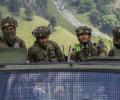
Two days after the India-China military talks, the joint statement, issued in New Delhi by the Indian Army said both sides had a 'candid and in-depth exchange' relating to disengagement along the Line of Actual Control (LAC) in the Western Sector of India-China border areas.
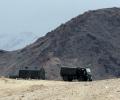
'When the adversary has tasted what you can do, he is going to be more experienced in countering how the Indians think.' 'He will go back, rework and come back.'
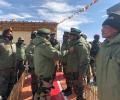
Gen Naravane awarded Commendation Cards to a number of soldiers who fought valiantly during the recent face-offs with Chinese Army.

Both sides have completed creation of a buffer zone of three kilometres in the three friction points of Galwan Valley, Gogra and Hot Springs as part of a temporary measure aimed at reducing the possibility of any confrontation.

His attack on the government came a day after Defence Minister Rajnath Singh assured Parliament that India has not conceded anything in the sustained talks with China and it will not allow even an inch of its territory to be taken away by anyone.
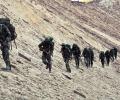
China and India have made 'positive progress' to resolve the border standoff, with both sides maintaining close communication through diplomatic and military channels, a senior foreign ministry official said in Beijing on Friday.

The two sides are also expected to finalise a roadmap for restoration of peace and tranquility in the high-altitude region that witnessed an eight-week bitter standoff between the troops of the two countries.
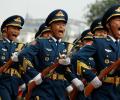
Since the June 15 clash, the PLA has inducted large numbers of troops, armoured vehicles and artillery along the LAC, from Depsang and Galwan in northern Ladakh to Hot Springs, Pangong Tso, and Chushul in central Ladakh, to Demchok and Chumar in southern Ladakh.
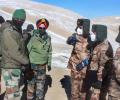
'We hope the Indian side will work with China to follow through the important consensus of our two state leaders, abide by relevant agreements and treaties to de-escalate the tension at the border'
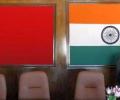
China said that "sound and stable ties" serve the common interests of China and India.
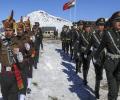
'They also agreed that for the overall development of bilateral relations it was essential to maintain enduring peace and tranquillity in the border areas,' the MEA said in a statement.
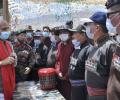
The dedication of Indian soldiers and veterans towards the country is an 'exemplary example', Defence Minister Rajnath Singh said on Sunday soon after arriving in Ladakh on a three-day visit aimed at taking stock of India's military preparedness in the region in the face of a prolonged border row with China.

The next phase of the de-escalation process will kick off only after the fourth round of talks between corps commanders of the two sides.

With the two armies again in a face-off at multiple points, there is apprehension of renewed clashes.
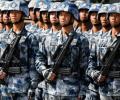
Chinese military has also deployed a sizeable number of its troops in Galwan Valley, the site of the violent clashes on June 15 that left 20 Indian soldiers dead.
Indian Army Chief General M M Naravane had said on Wednesday that India was hopeful of resolving issues related to disengagement at Patrolling Point 15 (Hot Springs) in eastern Ladakh in the 14th round of talks.

Member of Parliament from Arunachal Pradesh Tapir Gao said on Wednesday that a teenager, identified as Miram Taron, was abducted by the People's Liberation Army from Lungta Jor area under Siyungla area on Tuesday.
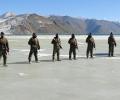
"Against such background, the words and deeds of relevant important military and government officials and military deployments should be conducive to deescalating and cooling down the situation, and to enhancing mutual trust, rather than the opposite", the spokesman said.

India and China are likely to hold another round of diplomatic talks this week on eastern Ladakh with a focus on moving forward in disengagement of troops in the remaining friction points, people familiar with the development said on Tuesday.
Gen Wang is the fourth commander to head the Western Theatre Command after the eastern Ladakh standoff began in May last year.
The Indian Army has been pitching for a faster disengagement process in areas like Hot Springs, Gogra and Depsang to bring down tension in the mountainous region.

After the disengagement process is completed, the two armies are likely to hold further talks to take the process further.

Sources indicated that during Saturday's talks, India will insist on a faster disengagement process in remaining areas to bring down tension in the region, which has witnessed a tense standoff between the two militaries for over nine months.
India and Chinese troops on Saturday exchanged sweets and greetings at 10 border posts along the Line of Actual Control (LAC) including in eastern Ladakh to mark the New Year, officials said.
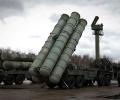
RInstead of disengagement, the Indian and Chinese armies have deployed an estimated 35,000 to 40,000 soldiers each along the LAC. The PLA has deployed S-400 air defence missiles to neutralise the IAF's advantage in air power

Vice Chief of Army Staff Lieutenant General C P Mohanty on Thursday carried out a comprehensive review of India's military preparedness in eastern Ladakh on the first day of his three-day visit to the region where Indian and Chinese troops have been locked in a bitter standoff for over a year.
There was no official word on the outcome of the talks.

The marathon fourth round of Lt Gen-level talks also focussed on steps for pulling back large number of troops and weapons from rear bases along the Line of Actual Control in eastern Ladakh.

After a gap of over three months, India and China on Wednesday are holding another round of high-level military talks to resolve the 20-month-long military standoff in the remaining friction points in eastern Ladakh, sources in the security establishment said.
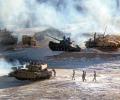
'The Chinese are only about 160-170 km behind.' 'It will not take much time for them to bring their troops back, considering that they have better infrastructure -- and the weather is now favourable.' 'They can move in much faster as the terrain favours them.'

The shelters were installed in locations near Tashigong, Manza, Hot Springs and Churup among others, in reflection of simmering tensions between the two sides in the region.

China said on Tuesday that the current situation on the border areas with India was "stable" as it confirmed that the 14th round of Corps Commander-level talks to discuss the disengagement process in the remaining friction points in eastern Ladakh will be held on Wednesday.
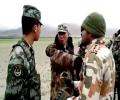
Over the last few weeks, bipartisan support for India against China has been increasing.

'Their deteriorating economic and international situation is also responsible for being more reasonable.'

The talks took place over video call on Sunday. According to sources, talks were held for over two hours in a cordial and forward-looking manner.

China plans to build a new highway along the Line of Actual Control (LAC) with India as part of Beijing's efforts to strengthen its strategic position and project its power, a media report said on Wednesday.
